Garden skills
Overwintering Plants: What Stays Outside and What Comes In
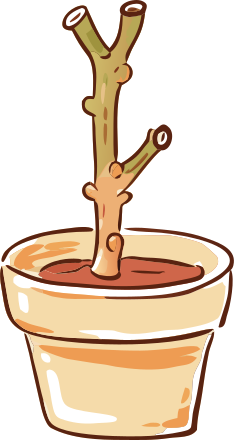
The pepper plant you're about to pull out is a perennial. So are the tomatoes, the eggplant and the rosemary. Somewhere frost never reaches, they'd all live for years, and a pepper plant turns into a small woody shrub.
Where winter gets cold, frost ends them every fall and we call them annuals. Overwintering just means getting a plant from this fall to next spring alive. For some plants that takes no work at all, and for others it takes a pot and a window.
The short answer: hardy perennials like chives, thyme, mint and strawberries stay outside, with mulch where winters are harsh. Borderline plants like rosemary and artichokes can stay out under deep mulch in a sheltered spot. Peppers, lemongrass, bay and potted citrus come indoors before frost, and dahlia tubers and ginger get dug and stored.
What does overwintering mean?
It's whatever a plant needs to get through your winter, and plants sort into three groups.
- The ones that stay out and need nothing. They're built for cold. They die back or go quiet, and they come back on their own.
- The ones that can stay out with help. They're near the edge of what your winters allow, and mulch and shelter can tip the odds.
- The ones that come in. Frost kills them outright, so they spend the winter in a pot indoors, or dug up and stored.
Which group a plant lands in depends on how cold your winters get. A rosemary that lives outside for a decade in one garden is dead by December in another. This is the one job a hardiness zone is built for, so the tag on the plant is the place to start.
What can stay outside all winter
More than most people expect.
- Hardy perennial herbs. Chives, thyme, oregano, mint and sage all come through cold winters in the ground. Chives and mint die back to nothing and return in spring. Thyme and sage hold their leaves and just stop growing.
- Strawberries. They're hardy, but the crowns sit right at the soil surface, where freezing and thawing can push them out of the ground. Where winters are cold, cover them with 3 to 4 in of straw once the cold has settled in.
- Hardy vegetables. Kale, leeks, parsnips and carrots aren't perennials, but they hold in the garden through a lot of cold, and several taste better for it. (Here's which plants a frost improves.)
One caution: anything in a pot is a different story. Roots in the ground are insulated by all the soil around them. Roots in a pot have cold air on every side, so a plant that's hardy in your garden bed may not be hardy in a container on the patio. A common rule of thumb is that a potted plant needs to be rated about two zones colder than yours to winter outside in its pot. Otherwise, move the pot against the house, sink it into the ground, or put it in an unheated garage once the plant is dormant.
What needs protection to stay outside
These are the borderline plants, and how they do depends on your winter and on where in the yard they're planted.
- Rosemary. It can take light frost with a thick mulch over the root zone and something to break the wind. Cold, wet roots do more damage than cold alone, so drainage matters as much as mulch does.
- Artichokes. After the first hard frost, cut the stalks back to about 12 in and mound 12 to 18 in of mulch over the crown. An upturned basket or box over the mound helps hold it in place. The crown is the part that has to survive.
- Bay laurel, where winters are mild enough for it to live outside. Mulch 3 to 4 in over the roots and shelter it from cold, drying wind.
- Citrus in the ground, in a climate that only sometimes freezes. Trunk wraps and frost blankets on the cold nights, with the blanket draped all the way to the ground so it traps the warmth coming up from the soil.
A sheltered spot is worth a lot here. The same rosemary has a much better chance against a south-facing wall than out in the open. (More on the warm and cold corners of your own yard.)
And it's still a gamble. Protection helps in an ordinary winter and may not be enough in a harsh one, so if a plant matters to you, take a cutting or pot up a piece of it as a backup.
What to bring inside before frost
- Peppers. Before the first frost, prune the plant back to 4 to 6 in above the main fork, strip off the remaining leaves and pot it up. Keep it somewhere bright at 55 to 65F and water very sparingly, just enough to keep the stems from shriveling. It'll look bare and dead for months. That's normal.
- Lemongrass. Cut the stalks back to about 6 in, pot up the clump if it's in the ground, and give it a bright window where it stays above 50F.
- Bay laurel in a pot. It's easygoing indoors. A cool room with very little water lets it rest, and a warm, bright room where you water it like a houseplant works too.
- Potted citrus. Bring it in before nights are regularly below 40F, and give it your brightest window, with at least 6 hours of light.
- Rosemary in a pot. A bright, cool spot with some air moving around it. Water only when the top inch of soil is dry.
- Geraniums. Pot them up and keep them in a bright, cool spot with very little water, or root a few cuttings and let the big plants go.
These don't all come in on the same night. Some want to be indoors weeks before the first frost, and each plant has its own number.
Tubers and roots to dig and store
Some plants spend the winter out of the ground entirely.
- Dahlias. Where the ground freezes, wait until frost blackens the foliage, then cut the stems back and gently dig the clump. Brush off the soil, let it dry for a day, and store it somewhere cool, dark and frost-free, around 40 to 50F, in barely damp peat or vermiculite.
- Ginger and turmeric. Once the foliage yellows and dies back, dig the rhizomes and brush them off without washing them. Let them dry in a warm spot for a few days, then store them in slightly damp peat or coir at 50 to 60F.
Check on stored tubers about once a month. Take out anything that's gone soft or moldy, and add a little moisture if they're starting to shrivel.
How to keep a plant alive indoors until spring
Most plants that die indoors over winter die from kindness.
- Water far less than feels right. A resting plant in low winter light uses very little water, and wet soil rots the roots. Let the soil dry out almost completely between waterings for peppers and rosemary.
- Look for pests before the plant comes in, and keep looking. Aphids can show up even on a leafless pepper. Scale shows up on bay and citrus as small brown bumps on the stems and under the leaves. Spider mites like dry indoor air.
- Don't expect growth. The goal is a plant that's alive in March. If it holds steady, it's working.
- Take it back out slowly. When the weather warms, give the plant a week or two of gradually more light and water before it's outside full time.
Is it worth overwintering peppers and tomatoes?
For a pepper you love, yes. An overwintered pepper starts spring with a full root system and a woody frame, so it tends to fruit earlier than a seedling would.
For tomatoes, mostly no. They're perennials too, but they're big, they need more light than a window gives them, and they grow so fast from seed that there's little to gain.
And you don't have to save everything. Window space runs out fast. Pick the one or two plants you'd miss, and let the rest be annuals this year.
If you garden somewhere with mild winters, most of this list just stays in the ground. Peppers and rosemary carry on from year to year, and the season you plan around is summer. (Here's how the year runs in a hot climate.)
Where Verna fits, and where it doesn't
Verna's overwintering guidance is written for each plant: prune the pepper back and strip its leaves before it comes in, cut the lemongrass to 6 in and pot it up, mound mulch over the artichoke crown. And it keeps following the plant after that, whether it's wintering indoors or under protection outside, with a nudge to check the stored pepper, or to look over the mulch after a storm.
What it can't do is see your windowsill. Which plants are worth the space, and whether the rosemary gets the sheltered wall or a pot in the kitchen, are your calls to make.
The short version
Leave the hardy herbs and the strawberries where they are, and mulch them if your winters are harsh. Give the borderline plants deep mulch and your most sheltered spot. Bring in the peppers, the lemongrass and the potted citrus before frost, and water them far less than you think you should.
A pepper that looks dead in January is usually fine.
Quick questions
Can I overwinter pepper plants?
Yes. Peppers are perennials that frost kills, so a plant brought in before the first frost can live for years. Prune it back to 4 to 6 in above the main fork, strip the remaining leaves, pot it up, and keep it somewhere bright at 55 to 65F with very little water. It'll look bare until spring, which is normal.
When should I bring my plants inside for the winter?
Before the first frost for most of them, and earlier for a few. Lemongrass wants to be in before nights drop below 50F, and potted citrus before nights are regularly below 40F. Peppers need to come in before any frost. Rosemary can wait until nights approach 30F. Go by each plant's own number.
Why does my rosemary die indoors every winter?
Usually it's too much water, with too little light and air. Indoors, rosemary is prone to root rot from overwatering and to powdery mildew in still air. Give it the brightest, coolest spot you have and some air movement, and water only when the top inch of soil is dry.
Guidance that follows each plant through winter
Verna keeps track of where each plant is in its life, indoors or out.


Get garden notes in your inbox
Short seasonal notes from Verna on what to plant and do. No spam, and you can unsubscribe anytime.
You're subscribed. See you in the garden.