Garden planning
Microclimates: Why Your Yard Isn't the Weather Station
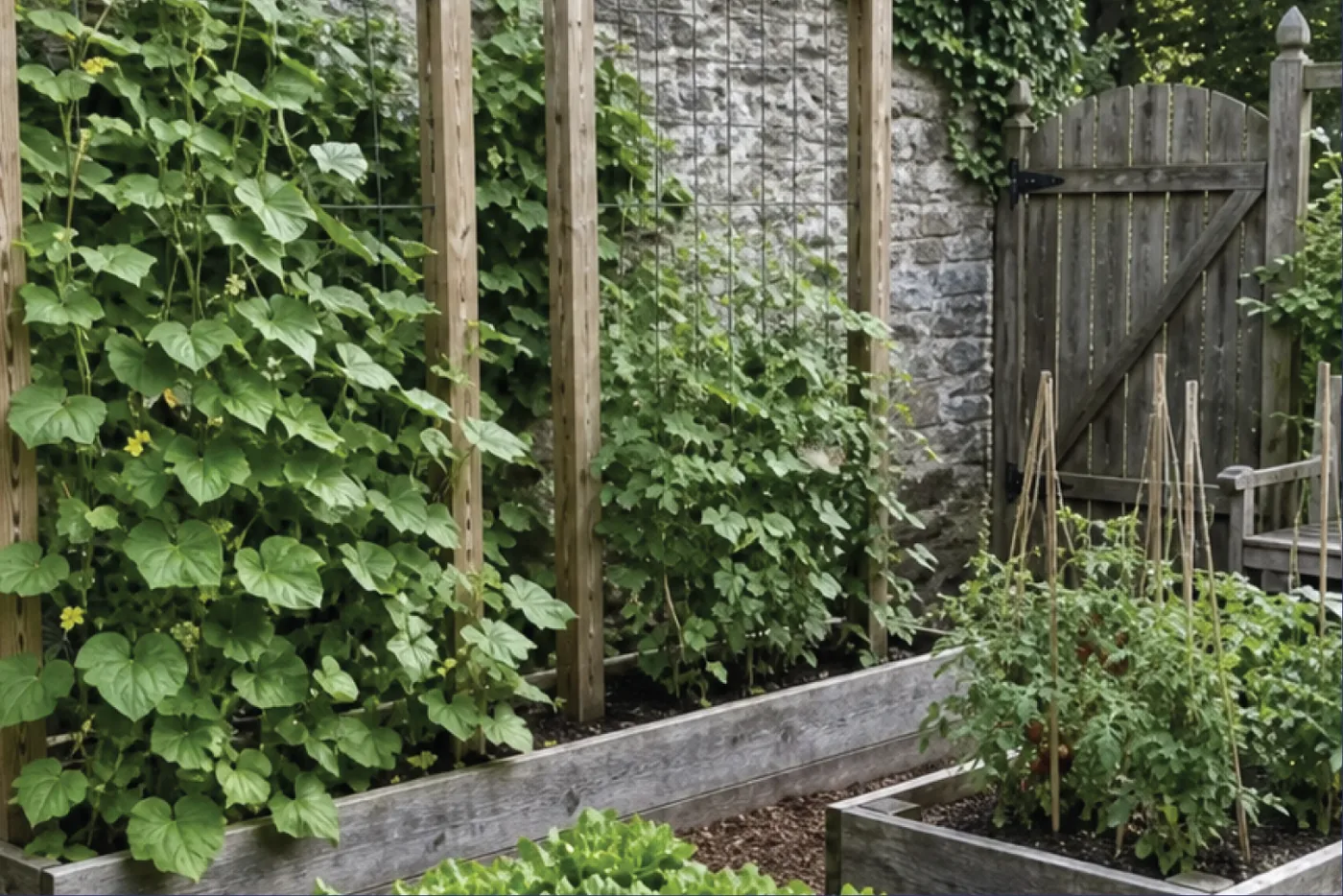
Two gardeners live a mile apart. They buy the same packet of the same lettuce, sow it the same weekend, and water it about the same amount. One of them is picking salad in five weeks. The other gets a patchy row that bolts before it's worth cutting.
Nothing went wrong, and neither of them did anything special. They just have different gardens, in a way no chart is fine-grained enough to show.
Here's what is easy to miss. The temperature you get on your phone comes from a weather station. That station might be ten miles away. It's sitting over open ground, in the shade of a louvered box, about four and a half feet off the surface. It was built to give a clean, comparable reading, which means it was built specifically to be free of everything your garden is full of. Walls. Fences. Slope. Trees. Pavement. A shed.
Your garden isn't a clean reading. It's several small climates sitting next to each other, and once you can see them, a lot of confusing results stop being confusing.
The short answer: a microclimate is a spot that runs warmer, colder, drier or windier than the rest of your yard. Most gardens have four: a warm wall, a cold pocket, a dry strip and a wind lane. Finding yours explains most same-seed, different-result mysteries, and used well they stretch your growing season at both ends.
The four microclimates most yards have
The warm wall. A masonry or brick wall facing the sun absorbs heat all day and gives it back after dark, so the air beside it stays warmer at night than the open bed does. That's the strip where a pepper keeps ripening after the rest of the garden has visibly stopped, and where the last tomatoes actually finish. It's also, less charmingly, where things dry out fastest.
The cold pocket. Cold air is dense, so on a still clear night it slides downhill and settles at the bottom, more or less the way water does. A dip in the lawn, the low end of a sloping yard, or the ground behind a solid fence at the bottom of a slope will all collect it. Those places get touched first in fall and hold onto the cold longest in spring. If one bed always seems a couple of weeks behind, this is usually why, and a solid fence running across the slope is often the thing making it worse.
The dry strip. Alongside a path, a driveway, a foundation, or a big shallow-rooted tree, the soil loses water far faster than the rest of the garden. It looks identical from above. It just needs watering on a completely different rhythm, and the plants there will tell you long before the soil does.
The wind lane. A gap between two buildings, or the open side of a corner lot, funnels wind. Wind pulls moisture out of leaves faster than roots can replace it, so plants in that lane wilt on days when nothing else does, and young transplants there take much longer to settle.
How to find your yard's microclimates without any equipment
You mostly already know. It's a matter of writing down what you've noticed and treating it as information about your specific garden.
Walk out early, before the sun is fully up, and look at where the dew sits longest. Those are your cool, damp spots. Later in the season, notice where the first frost lands, because it's rarely the whole garden at once.
Then watch the shade across a day. Not once, but at 9, at 1, and at 5, and ideally again in a different month, because the sun sits much lower in October than it does now and a fence that shades nothing in July can shade half a bed in fall.
Notice which bed is still damp two days after watering and which one is dust. Notice where the snow melts first. Notice where the weeds come up earliest in spring, because the weeds are running the experiment for you and they don't hide the results.
Four or five sentences of that is genuinely enough. Write them on your phone this week, while the garden is still in front of you.
Planting by microclimate: what goes where
The useful shift is to stop treating your microclimates as a problem to correct and start treating them as more room to work with. A yard with a warm corner and a cold corner has a longer working season than a uniform yard does, as long as the right thing goes in each place.
So the heat-lovers go against the warm wall, and they'll go on longer there than anywhere else. The cool-season greens go in the spot that's shaded from mid-afternoon, and they'll hold off bolting well past the ones out in the open. Anything you want early in spring goes in the part that warms up first, rather than the part that looks tidiest. Anything tender stays out of the pocket at the bottom. And the dry strip gets the plants that don't mind, or it gets mulched properly and watered on its own schedule.
You can move the edges, too. Mulch narrows the swing between soaked and bone dry. A slatted fence or a hedge slows wind without creating the dead-air cold trap a solid fence does. A row cover buys a few degrees on the nights that matter. None of these are dramatic, and all of them can help you shape your garden. A row cover works the same trick on a smaller scale, and the fall guides lean on it for a reason.
Where Verna sits in this
Verna works from your coordinates rather than from a region. It reads the daily climate record for your exact spot, works out your frost windows and the shape of your season from that, and matches each plant's own tolerances against it. So what you get is already much closer to your garden than a chart can be.
What it can't see is your wall. Nothing can, from the outside, and Verna doesn't try to map your yard. What it does instead is follow each plant through its life and adapt as you tell it what you're actually seeing. So the pepper against the warm wall that's still going in October isn't a disagreement with Verna. It's that plant's own timeline, and Verna keeps up with it.
Which leaves the microclimates yours to hold, and that's the right place for them. Verna gives you the shape of the season where you live. You're the one who knows which corner of the yard to spend it in.
Knowing your yard has several climates in it changes what you ask when you're gardening. It stops being "when do I plant lettuce" and starts being "where do I plant lettuce, and when does that spot open." That's a better question, and it's one you can only answer standing in your own garden.
Two gardeners, a mile apart, same seed. Two dramatically different gardens.
Quick questions
What is a microclimate in a garden?
A patch of your yard where conditions differ from the forecast and from the rest of the garden: the strip beside a sun-facing wall that stays warm after dark, the low corner where cold air pools on still nights, the dry band along a path or foundation, the lane between buildings that funnels wind.
How do I find the microclimates in my yard?
Watch, then write it down. Where the dew sits longest at dawn, where the first frost lands, how the shade moves at 9, 1 and 5, which bed is still damp two days after watering, where snow melts first and weeds come up earliest. Four or five sentences of that is genuinely enough.
Why is my garden different from the weather forecast?
The forecast comes from a weather station built to give a clean, comparable reading: open ground, shaded box, several feet up, possibly miles away. Your garden is full of exactly what the station excludes (walls, fences, slope, trees, pavement), and those are what set its real temperatures.
Get the timing for your exact spot
Verna reads your local climate and follows each plant through its life, so the guidance fits the garden you are actually growing.


Get garden notes in your inbox
Short seasonal notes from Verna on what to plant and do. No spam, and you can unsubscribe anytime.
You're subscribed. See you in the garden.