Garden skills
Curing and Storing Your Harvest: How to Make It Last Through Winter
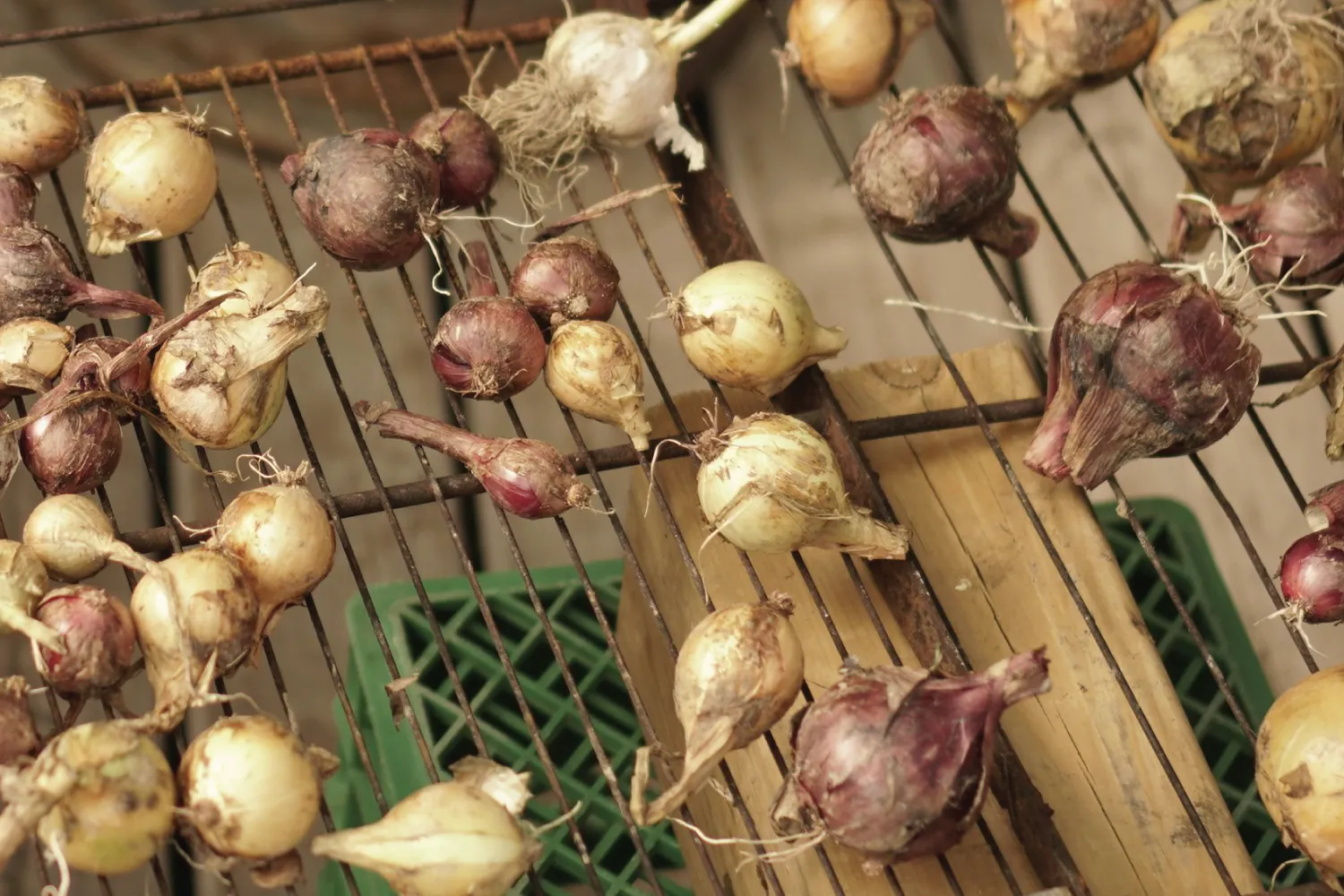
A squash that looked perfect at harvest can be soft by midwinter, and onions that went into the basket a little damp can be sprouting a month later. Most of what goes wrong in storage started in the week or two after picking.
That's because storing a harvest is really two jobs. First comes curing, a short, warm rest that toughens skins and heals the nicks from digging. Then comes the long, cool keep. The two want nearly opposite conditions, and each vegetable has its own version of both.
The short answer: cure first, then store cool. Winter squash cures warm and dry for 1 to 2 weeks, then keeps at 50 to 60F. Sweet potatoes cure warm and humid, then keep at 55 to 60F, never in the fridge. Onions and garlic cure warm and airy, then stay cool and dry. Potatoes cure cool, then store cold and dark.
What does curing actually do?
Curing gives a fresh harvest time to finish a few things before it's packed away. Skins and rinds harden, so they lose less moisture. Small cuts and scrapes from digging seal over. And in winter squash and sweet potatoes, some of the starch turns to sugar, which is why both taste better a few weeks after harvest than on the day you bring them in.
Not everything needs it. Acorn squash and delicata go straight into storage, and leafy and fresh vegetables aren't cured at all.
If something went straight into storage this year without curing, it isn't ruined. It may not keep as long, so plan to eat those first.
How to cure and store winter squash and pumpkins
Cure: somewhere warm, dry and airy, around 80 to 85F, for 10 to 14 days for winter squash and 7 to 10 for pumpkins. A sunny porch or a warm room works. Leave an inch or two of stem on, and carry them by the body rather than the stem, since a stem that snaps off leaves an opening.
Store: cool and dry, around 50 to 60F. A spare room or a closet on an outside wall is often closer to that than a damp basement. Keep them in a single layer, not touching, so you can see each one.
You'll know it was ready to pick by the rind. The ripeness post covers the fingernail test.
How to store sweet potatoes (and why never the fridge)
Cure: warm and humid, around 80 to 85F, for 7 to 10 days. Humidity is the part that's hard to find in a house. Consider a closed cardboard box with a damp towel inside, in the warmest room you have, and check them every couple of days.
Store: 55 to 60F, dark and dry. Not the fridge. Cold damages sweet potatoes, and it shows up as off flavors and centers that stay hard when you cook them.
Handle them gently the whole way. Their skins are thin when they come out of the ground, and every bruise shortens how long they'll keep.
How to cure and store onions, garlic and shallots
Cure: warm, dry and well ventilated, out of direct sun. Lay them in a single layer on a screen or rack, or hang them in bundles. Onions want around 75 to 85F for 2 to 4 weeks, garlic 2 to 4 weeks, shallots 1 to 2. They're done when the necks are completely dry and the outer skins rustle when you handle them.
Store: cool, dry and airy. Mesh bags, a basket or a braid all work. Softneck garlic is the one to braid, and it's easiest while the stems are still a little pliable early in the cure. The garlic post covers the hardneck and softneck difference.
Keep them away from potatoes. Onions do best dry, potatoes do best humid, and they tend to spoil faster side by side.
If you're ordering onions for next year, check whether they're short-day or long-day first, since the wrong one never makes a bulb.
How to cure and store potatoes
Potatoes are the odd one out, because they cure cool.
Cure: dark and well ventilated, around 50 to 60F, for 1 to 2 weeks, in a single layer. Brush off the loose soil but don't wash them.
Store: cold, dark and humid, around 38 to 45F. Keep them in the dark so they don't turn green.
Checking on stored vegetables over winter
Once a month or so, go through what you've stored. Pull anything with a soft spot, a sprout or a damp patch, and use it soon or toss it, because one going soft can spread to the ones touching it. A single layer makes this much easier.
Where winters are mild, finding a cool enough spot is the hard part. An unheated closet or a garage that stays cool but doesn't freeze can work. Otherwise, store less and eat it sooner. And since fall and winter are prime growing seasons where you are, there's often something fresh coming in to take its place.
Where Verna fits
For the plants that need it, Verna's harvest guidance includes a curing step written for that plant: how warm, how long, how to tell it's done, and where it should go after. Winter squash gets a different cure from sweet potatoes, potatoes get a cool one, and acorn squash and delicata skip it.
So the storage half of the harvest is spelled out per plant, the same way the growing half is.
The short version
Cure first, then store cool. Squash and pumpkins: warm and dry, then 50 to 60F. Sweet potatoes: warm and humid, then 55 to 60F, and never the fridge. Onions and garlic: warm and airy until the necks are dry, then cool and dry. Potatoes: cool and dark, then cold, dark and humid. Check everything once a month.
And jot down which varieties kept longest. It's one of the most useful notes for next year.
Quick questions
Do I need to cure squash before storing it?
Most winter squash and pumpkins, yes. A week or two somewhere warm and dry, around 80 to 85F, hardens the rind and helps them keep for months. Acorn squash and delicata are the exceptions and go straight into cool storage.
Can I store sweet potatoes in the fridge?
No. Cold damages sweet potatoes, causing off flavors and centers that stay hard when cooked. After curing, keep them somewhere dark and dry at around 55 to 60F, like a closet or a cupboard away from the stove.
How do I know when onions are done curing?
When the necks are completely dry and the outer skins are papery and rustle when you handle them. That usually takes 2 to 4 weeks somewhere warm, dry and airy. Then trim the tops and roots and move them to cool, dry storage.
Guidance written for each plant
Verna keeps track of where each plant is in its life, and what each one needs now.


Get garden notes in your inbox
Short seasonal notes from Verna on what to plant and do. No spam, and you can unsubscribe anytime.
You're subscribed. See you in the garden.